
Walk Dovercourt: Toronto's Missing Middle Housing Success Stories
Reserve Your Tour Spot (Free)
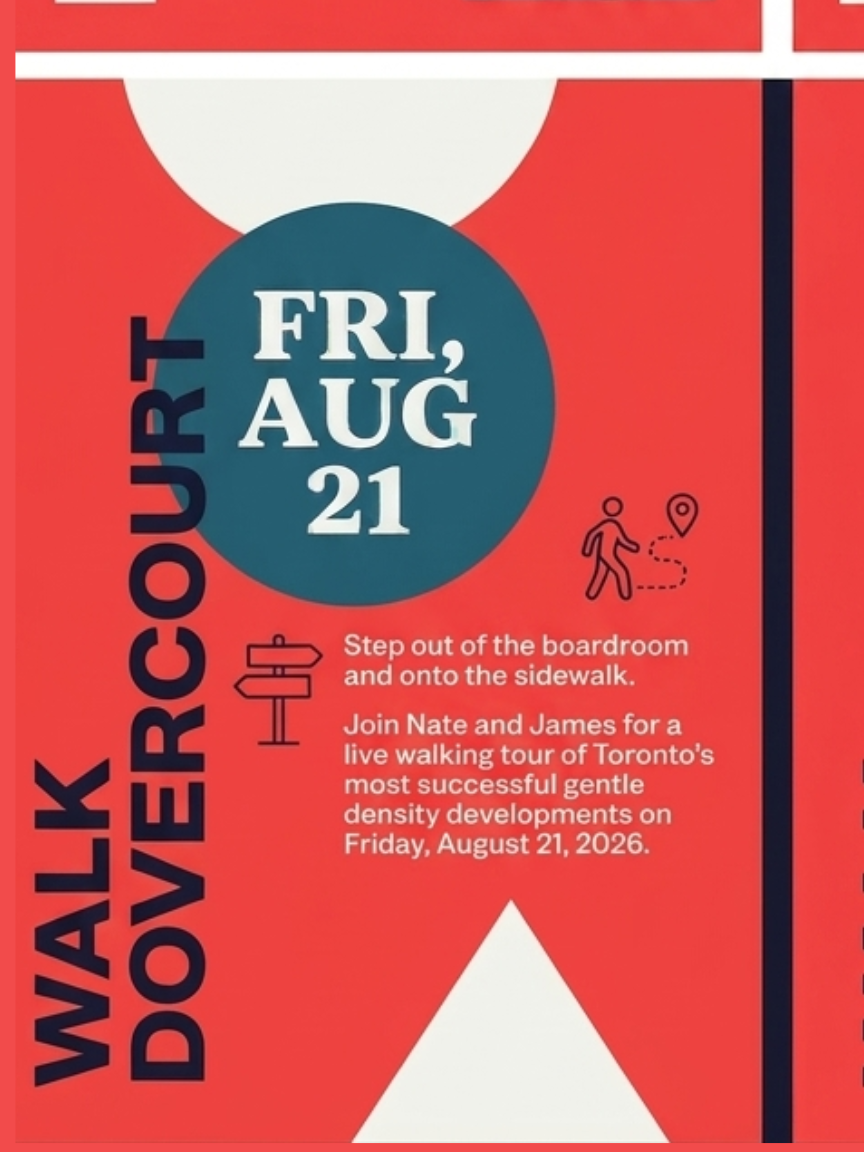
Step out of the boardroom and onto the sidewalk. Join Nate and James for a live walking tour of Toronto’s most successful gentle density developments on Friday, August 21, 2026.
Reserve Your Spot
Complete the registration form below to secure your place. Space is limited, and registration is available on a first-come, first-served basis.
We look forward to welcoming you.
Why Dovercourt?
TORONTO Dovercourt housing, Toronto multiplex success stories.
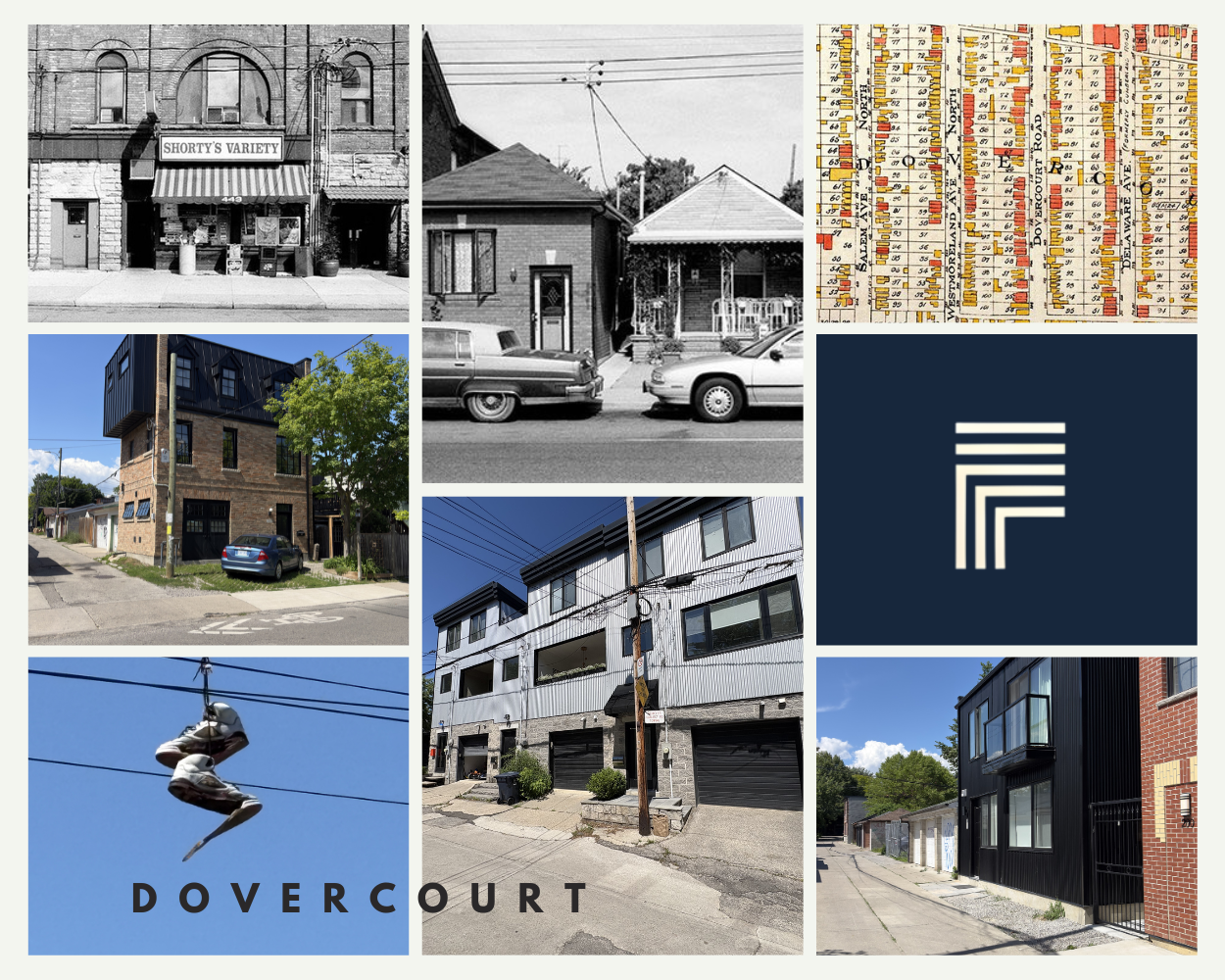
Toronto’s Missing Middle Housing is often debated in boardrooms, planning meetings, and council chambers, yet its greatest success is found where it has already been built.
Join us as we explore one of Toronto’s most successful Missing Middle neighbourhoods, where thoughtfully designed multifamily housing has strengthened the community while providing much-needed homes. Within a comfortable walking tour, you’ll visit several completed developments and gain firsthand insight into how this housing form integrates into an established urban neighbourhood.
Meet developers, real estate professionals, renters, and other community stakeholders to hear their perspectives, ask questions, and better understand the role Missing Middle housing plays in creating vibrant, livable communities. Experience how well-planned infill development can enhance neighbourhood character, increase housing choice, and contribute to Toronto’s long-term growth.
Dover Court, Multifamily Questions
Dovercourt has become one of Toronto’s leading Missing Middle success stories, with multiple developers delivering high-quality multiplex projects throughout the neighbourhood. Rather than discussing housing policy in theory, Dovercourt demonstrates what thoughtful planning and well-executed development look like in practice.
Seeing these projects firsthand is the best way to appreciate how intelligent design can add much-needed housing while enhancing the character of an established neighbourhood.
In the meantime, here are answers to some of the most common questions I receive from homeowners, developers, investors, and prospective tenants about Missing Middle housing and multiplex development..
Do multiplexes ruin neighbourhoods
Multiplexes do not inherently diminish a neighbourhood. When thoughtfully designed, appropriately located, and supported by existing infrastructure, they can introduce much-needed housing while preserving and often enhancing the character of an established community.
Poor planning and weak design can negatively impact any form of development, whether it is a multiplex, a detached home, or a high-rise. The determining factor is not the building type, but the quality of its planning, architecture, and execution.
The Dovercourt multiplex projects demonstrate this well. They have not only delivered much-needed housing but have also contributed architecturally to the neighbourhood through intelligent, context-sensitive design. Rather than overwhelming the community, these projects integrate with the existing streetscape while elevating its overall quality.
When executed thoughtfully, Missing Middle housing offers a compelling alternative to high-rise intensification. It provides gentle density, supports complete communities, and creates housing that respects the scale and character of existing neighbourhoods.
In Toronto, there are very few examples where multiple developers within the same neighbourhood have collectively embraced this approach with such consistently positive results. Dovercourt Rd. stands as an example of how collaborative, high-quality Missing Middle development can strengthen a neighbourhood while helping address the city’s housing needs.
Why Dovercourt has become so successful for multiplexes
Dovercourt has emerged as one of Toronto’s strongest examples of successful Missing Middle development because of its clear and predictable planning framework. While many parts of Toronto are subject to overlapping policies, including Secondary Plans, Major Streets initiatives, heritage considerations, legacy zoning, and multiple by-laws—Dovercourt has largely avoided this complexity.
This planning clarity has allowed homeowners, architects, developers, and the City to focus on delivering well-designed multiplex housing rather than navigating competing regulations. When government establishes a simple, transparent framework and allows thoughtful development to proceed, the result is housing that is both economically viable and beneficial to the surrounding community.
The neighbourhood demonstrates that good planning does not require layers of complexity. Instead, clear rules, high-quality architecture, and respect for the existing streetscape have produced projects that integrate seamlessly into the community while providing much-needed housing.
Dovercourt is also one of Toronto’s most vibrant and multicultural neighbourhoods. Its mix of residents, local businesses, parks, schools, and transit creates an ideal setting for gentle density. Rather than changing the character of the neighbourhood, well-executed multiplex development has reinforced it bringing new families, supporting local commerce, and contributing to a more complete, resilient community.
Dovercourt shows that when planning is straightforward and design is prioritized, Missing Middle housing can successfully increase housing supply while enhancing neighbourhood character. It is a model for how Toronto can thoughtfully accommodate growth without relying exclusively on high-rise intensification.
How much is my Toronto lot worth for development?
Many homeowners assume that if their property can be redeveloped, it will automatically command a significant premium. In reality, the answer depends on the property’s development potential, market conditions, and the project’s economics.
With as-of-right Missing Middle zoning, many properties now share similar redevelopment opportunities. As a result, the market has become more competitive, and large development premiums are less common than many people expect. While an older or underutilized home may attract developers, the economics of small-scale multiplex projects are often tight, with relatively thin profit margins.
That said, every property is unique. Factors such as lot size, frontage, location, site constraints, servicing, and design potential can all influence what a developer is willing to pay.
Determining your home’s true development value requires more than reviewing comparable home sales. It involves understanding development economics, zoning, construction costs, and buyer demand. An experienced land and development sales specialist can identify your property’s highest and best use, evaluate its market potential, and negotiate with qualified developers to help maximize your sale price.
Not all real estate agents specialize in development land sales. Choosing an advisor with expertise in this niche can make a meaningful difference in your understanding of your property’s value and in achieving the best possible outcome.
Should I sell my property to a developer or redevelop it myself?
Deciding whether to sell your property to a developer or undertake the development yourself is one of the most important financial decisions a property owner can make. The right choice depends on your goals, risk tolerance, available capital, and level of experience.
If you receive a strong offer from a developer, selling can provide certainty, liquidity, and a straightforward transaction. Many owners prefer this option because it allows them to realize the value of their property without taking on the time, complexity, and financial risk of a development project.
Developing the property yourself can potentially generate a higher return, but it also requires significant capital, expertise, and patience. You will need to navigate planning approvals, design, financing, construction, marketing, and project management, while assuming the risks associated with cost overruns, delays, and changing market conditions.
Some property owners consider a joint venture with a developer, allowing them to retain an ownership interest while sharing in the project’s upside. Although this approach can be attractive, it also introduces additional complexity and risk. In many joint ventures, the landowner’s equity is the first capital at risk, making it essential to understand the legal, financial, and operational implications before proceeding.
An experienced land sales and development advisor can help you evaluate each option by assessing your property’s highest and best use, estimating development value, comparing potential financial outcomes, and identifying the risks associated with each strategy. The best decision is the one that aligns with your financial objectives, timeline, and risk appetite.
Is my house a candidate for Missing Middle housing?
YES – EHON: Expanding Housing Options in Neighbourhoods
Toronto City Council adopted zoning by-law amendments for multiplexes and laneway suites on July 23–24 as part of the Expanding Housing Options in Neighbourhoods (EHON) initiative. These updates align the City’s performance standards with Ontario Regulation 462/24 and support the recommendations outlined in the Garden Suites Monitoring Program Final Report, helping streamline the delivery of Missing Middle housing across Toronto.
What's it like to live in a missing middle multiplemultiplex.

Looking to sell your property or your next acquisition.
James Fields is a Toronto Real Estate Broker with Valery Real Estate Brokerage – Land Sales Group, specializing in land sales, development properties, and strategic real estate advisory.

Nate Chiu is a Real Estate Salesperson with Valery Real Estate Brokerage – Land Sales Group, assisting clients with land acquisitions, development opportunities, and residential real estate throughout Toronto and the GTA.